Commercial buildings in Maryland and Washington, D.C., rely heavily on consistent heating throughout the winter. As temperatures drop and systems run longer, the strain on HVAC equipment increases significantly. Without proper preparation and routine care, your commercial heating system can experience reduced efficiency, higher energy bills, and unexpected breakdowns. Understanding how to maintain your unit ensures comfort, safety, and smooth business operations.
Below are essential strategies to improve winter performance and keep your commercial HVAC system in peak condition.
Understand Why Winter Puts Extra Pressure on Commercial HVAC Systems
Winter weather affects HVAC systems in multiple ways:
- Cold air requires longer heating cycles.
- Snow and ice can accumulate around outdoor units.
- Temperature fluctuations can strain motors and compressors.
- Increasing indoor occupancy raises heating demand.
- Neglected equipment becomes more prone to failure.
Knowing these challenges helps businesses prepare well before temperatures hit their lowest point.
1. Schedule Pre-Winter HVAC Inspections
A professional inspection is the foundation of winter readiness. Hiring a licensed HVAC contractor ensures your system is examined by experts who understand commercial-scale systems.
A winter-prep inspection typically includes:
- Verifying thermostat calibration
- Testing heat exchangers
- Checking refrigerant levels
- Inspecting belts, motors, and electrical components
- Cleaning indoor and outdoor units
- Examining ductwork for leaks
This level of detail prevents inefficiencies and identifies early signs of failure.
2. Replace and Monitor Air Filters Regularly
Commercial HVAC systems move large volumes of air, which means filters clog much faster in business environments. Dirty filters reduce airflow, forcing the system to work harder and consume more energy.
To improve efficiency:
- Change filters every 4 to 6 weeks during peak winter usage.
- Use high-quality commercial-grade filters that trap fine particles.
- Set automated reminders for maintenance personnel.
Clear air pathways allow your heating system to produce consistent warmth with less strain.
3. Keep Ductwork Clean and Airtight
Duct leakage is one of the biggest energy losses for commercial properties. Warm air escapes through gaps or cracks, reducing overall heating efficiency.
To optimize winter performance:
- Seal leaks with commercial-grade mastic or foil tape.
- Schedule duct cleaning every year.
- Ensure insulation levels are appropriate for winter temperatures.
Efficient ductwork improves comfort while lowering operational costs.
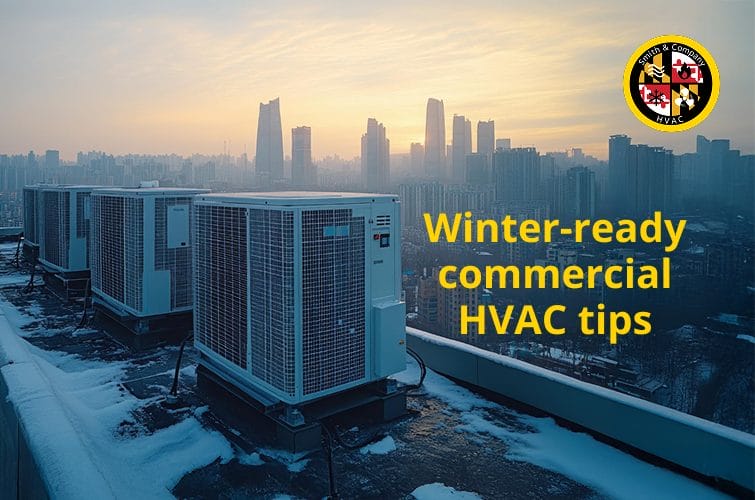
4. Protect Outdoor Units from Snow and Ice
Winter storms can interfere with airflow and cause mechanical damage if ice builds up around your outdoor components.
Best practices include:
- Clearing snow after storms
- Installing protective barriers that block wind
- Ensuring drainage around the unit is unobstructed
- Keeping vegetation trimmed back for airflow
While protective structures help, never fully cover your commercial HVAC unit; it can trap moisture and damage components.
5. Keep Thermostats Optimized for Commercial Use
Smart thermostat management can drastically reduce winter energy consumption.
Recommended strategies:
- Set consistent heating patterns based on business hours.
- Lower temperatures during non-operational times without overcooling.
- Utilize zoning systems to control different areas independently.
- Install programmable thermostats for precision.
This prevents overuse while maintaining a comfortable indoor environment.
6. Improve Airflow and Reduce Obstructions
Blocked vents force the system to work harder, raising energy costs. In commercial spaces, furniture rearrangement and storage setups often unintentionally block registers.
Keep things efficient by:
- Ensuring vents remain open and unobstructed
- Rearranging office layouts if needed
- Cleaning diffusers regularly to prevent dust buildup
Balanced airflow protects the lifespan of your system and reduces strain on major components.
7. Maintain Proper Humidity Levels
Indoor air becomes extremely dry in winter. This affects not only comfort but also HVAC efficiency.
Maintaining balanced humidity helps:
- Reduce system cycling
- Improve heat distribution
- Prevent static electricity
- Preserve office furniture and electronics
Humidifiers and proper ventilation can stabilize humidity and support smoother HVAC performance.
8. Monitor Energy Bills and System Behavior
Rising energy costs without increased usage is a major indicator of system inefficiency.
Track patterns such as:
- Longer heating cycles
- Sudden temperature fluctuations
- Strange noises or odors
- Frequent on-off cycles
Early intervention prevents costly downtime or the need for emergency HVAC services.
9. Establish a Winter HVAC Maintenance Plan
Consistency is key. Instead of waiting for issues to arise, businesses should partner with a dependable provider that offers scheduled commercial HVAC services.
A winter-specific maintenance plan may include:
- Routine inspections
- Filter replacements
- Coil cleaning
- Component lubrication
- Emergency response availability
A structured plan ensures your system remains resilient even in the harshest weather.
Trust Smith & Company HVAC for Winter-Ready Commercial HVAC Care

Managing commercial HVAC systems during winter requires expertise, precision, and timely maintenance. Choose Smith & Company HVAC if you are a homeowner or have a business in Maryland and D.C. because we deliver reliable winter solutions designed for the region’s
toughest weather.
Here’s why you must choose us:
- Our team consists of highly trained commercial HVAC specialists
- We offer fast and dependable emergency HVAC services
- We provide comprehensive maintenance plans for winter efficiency
- And we also offer transparent pricing and trustworthy service
For dependable heating performance all winter long, Smith & Company HVAC is the partner your business can trust. Keep your building warm, efficient, and problem-free with our expert commercial HVAC solutions tailored for your needs.
FAQs
1. Does Smith & Company HVAC offer maintenance contracts for commercial buildings?
Yes. We provide customizable maintenance plans tailored to commercial spaces and winter conditions.
2. How quickly can Smith & Company HVAC respond to emergency calls?
We offer fast-response emergency HVAC services throughout Maryland and D.C., prioritizing businesses facing urgent heating failures.
3. Can Smith & Company HVAC service older commercial HVAC units?
Absolutely. Our technicians are trained to diagnose and repair older heating systems while helping businesses plan for future upgrades.
4. Do they provide energy-saving recommendations for winter?
Yes. We offer full efficiency evaluations to help businesses reduce energy bills during the coldest months.
5. Are their technicians certified?
All our technicians are fully certified and trained in advanced commercial HVAC systems.